

Preface: What is "mountaintopping"?
Those who have drunk high mountain tea will often hear tea people mention a word-- The mountain air.
This is not just a fragrance, nor is it a simple taste, but it is a kind of aroma produced by the Geographical Environment, Climatic Conditions, Tea Tree Characteristics and Tea Making Craftsmanship A unique atmosphere that has been nurtured together.
It is said that the mountain air is the "soul" of tea, and once tasted, it is hard to forget.
In this article, we will look at the Geography, Scientific Interpretation, Sensory Experience and Cultural Meaning Four perspectives on the mystery of "mountaintop air".

Geography: The flavor of the mountains
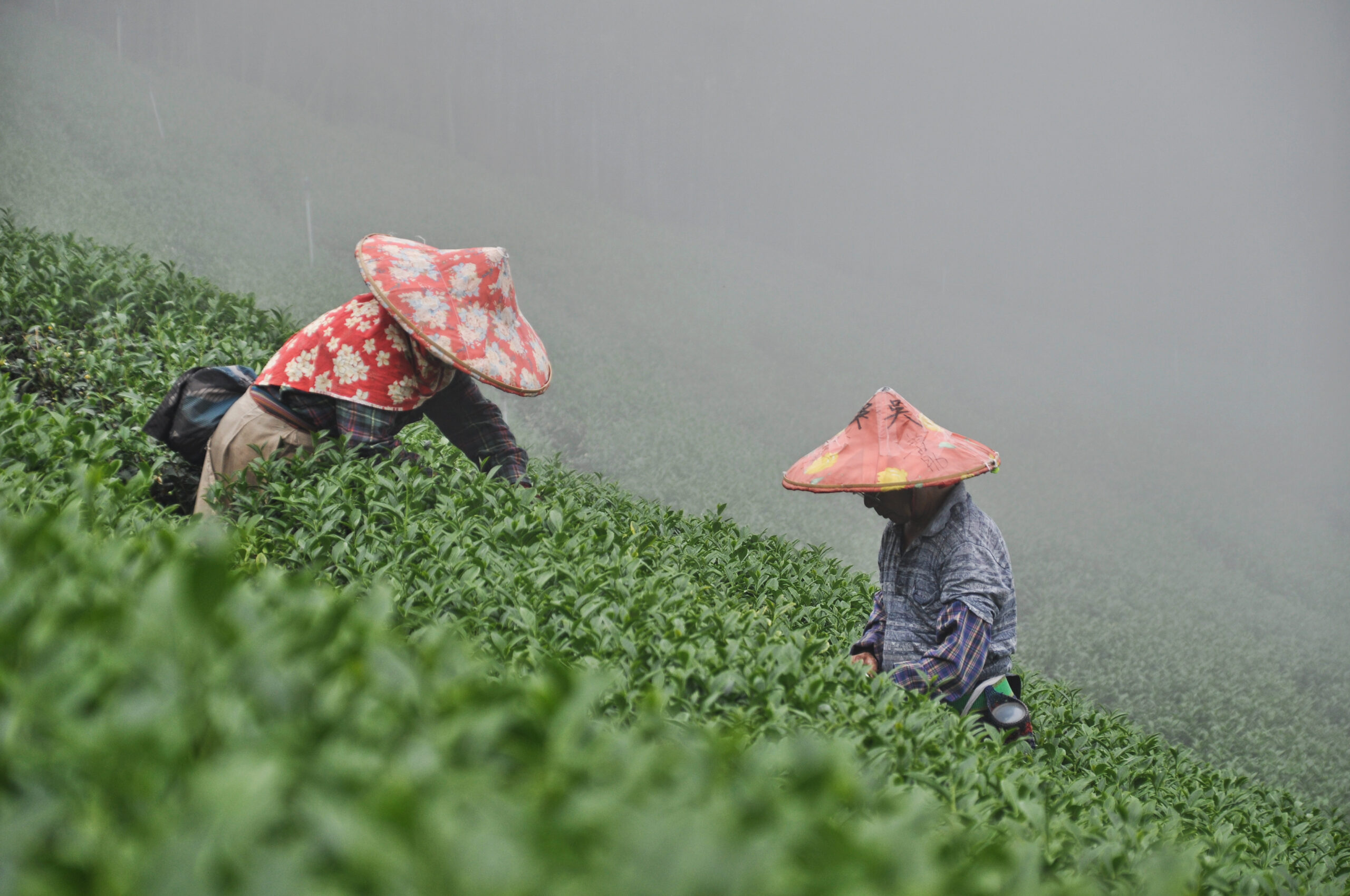
Taiwan's high mountain tea plantations are mainly located in 1,200-2,600 meters The tea is grown in mountainous areas such as Cedar Creek, Longfeng Gorge, Dayuling, and Fushou Mountain. These geographical conditions allow the tea to contain unique flavor genes.
- Large temperature difference between day and night
During the day, photosynthesis flourishes, accumulating a large amount of nutrients; at night, when the temperature drops, the tea tree's metabolism slows down, and the nutrients are "locked up" in the leaves. This makes the tea leaves thicker and contain more amino acids and aromatic substances. - lit. dazzling clouds and mist
The high mountains are always cloudy and foggy, with soft light, minimizing the damage caused by direct light. This "natural shade" reduces the production of catechins in tea leaves and minimizes bitterness. - Mineral-rich springs
Mountain soil is well drained and the roots can penetrate deep into the ground to absorb rich minerals. This cool and clean water condition brings a "cold mineral flavor" to the tea broth.
These natural environments are the root cause of the "cedar wood fragrance" and "cold mineral odor" of high mountain tea.

Science Explained: Mountaintopping at the Molecular Level
Hilltopping is not just a romantic adjective, there is a clear scientific basis behind it.
- Catechins
It tends to accumulate quickly under bright light, resulting in an astringent flavor. However, in high mountain tea regions where there is a lot of fog, the light is filtered and the content of catechins is lower, thus reducing the astringency of the tea broth. - Theanine
The low temperature environment helps the production of Theanine. Theaminic acid is the key ingredient that brings sweetness and freshness to the mouth, making high mountain teas mellow and refreshing. - Volatile Aromatics
In the high mountain environment, tea trees accumulate more aromatic substances such as monoterpenes and alcohols. The aroma emitted during brewing is often described as floral, fruity, or even woodsy with a "cedar-like" fragrance.
Thus, the scientific composition of the hillbilly is Low astringency, high sweetness, complex aroma.This is the reason why high mountain tea is so difficult to replicate.
Sensory Experience: How to savor the mountain air?
Can you smell the "hilltop smell" directly through your nose?
The answer is:Partially possible, but not completely.
- sweet smelling: When the tea is brewed, you can indeed smell some of the characteristics of "Shan Tou Qi" in the aroma that rises from the cup:
- cold minerality: Smells like mountain spring water or wet, cold stones.
- Fir/Forest Breath: Sometimes with a slight woody fragrance.
- floral and fruit scent: Volatile aromatics accumulated in the low-temperature alpine environment will be released in the heat.
The smell is like taking a breath into a mountain forest, fresh, clean, and a little bit cold.
- Pints:
- The real "mountain air" is not only smelled by the nose, it is a kind of Aroma + Flavor + Aftertaste。
- I smelled it through my nose.: Mainly volatile aromatic substances (e.g. linalool, terpenes) that bring fragrance.
- Drink it and feel it.Mineralization of the water, the smoothness of the tea broth on the tongue and throat, and the duration of the aftertaste.
All of these things add up to what tea people call "Shan Tou Qi".
- rhyme
After drinking the tea, there is a long lasting sweetness in the throat, accompanied by the smell of the forest that lingers on for a long time, making you feel as if you are still in the mountains and forests.
✅ Simple understanding:
- Smell: A top note (cold, woody) that captures the "mountain air" first.
- Taste: It is only then that you will feel the core soul of "Shan Tou Qi" (cold minerality, thickness, flavor).
👉 Therefore, sniffing alone can only capture the "pre-tone" of the mountain air; the true and complete feeling must be realized through the Smell + Taste + Rhyme Triple experience.

Culture and Spirituality: The Meaning of Shan Tou Qi
In traditional tea culture, mountains are not only a geographical environment, but also a symbol of cultivation.
The "Shan Tou Qi" is valuable not only because it creates the unique flavor of the tea, but also because it embodies the soul of the mountains, forests and the earth.
Every sip of high mountain tea is a conversation with the mountains.
The coldness and fragrance remind us to slow down and feel the purity of heaven and earth.
Conclusion: A sip of tea is a mountain
The mountain air is the most fascinating part of high mountain tea.
It originates from the geographical environment, and through the accumulation of scientific substances, it finally reveals to our senses a cold, fresh and long-lasting flavor.
🍵 When you raise your cup, you're drinking more than just the taste of tea.
It is the temperature, soul and story of the whole mountain.
👉 Have you ever been on a mountain where you felt the most unforgettable "mountain air"?